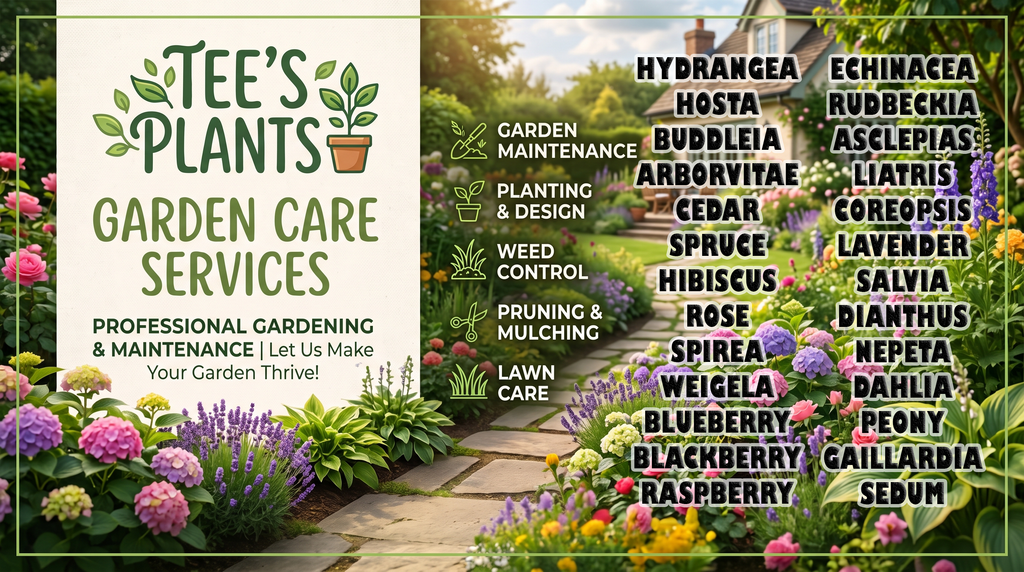
Whether you are looking to add a splash of spring color, attract local pollinators, or build a natural privacy screen, choosing the right plant is only half the battle. Knowing how to care for them, especially when it comes to timing things like pruning, ensures they thrive year after year in our southwestern Ontario climate.
If you need a gardener or landscaper in Chatham-Kent, Dresden, Wallaceburg, Tilbury, and other nearby towns, Tee’s Plants can help. Contact order@teesplants.com for a quote, or additional information.
Something you’ll see me mention and use a lot is “well balanced fertilizer“. That means a fertilizer with close or identical macro elements: Nitrogen (N) Phosphorus (P) Potassium (K)[together NPK]. For in-soil fertilizer, I recommend granular products that take months to break down completely.
Popular products are available in 10-10-10, 4-4-4, and other close ratios like 5-3-2. I recommend having a big bag of 10-10-10 to satisfy 90% of your initial garden fertilizing needs, specifically for your flowering and fruiting plants. Introducing a handful of 10-10-10 with a quick raking in the early spring translates to impressive plants and ensures that the micronutrients are available for the bulk of the season. It is very affordable, especially compared to some organic products. If you want to use organics, that’s okay, but understand that for organics…:
- Often times they’re more expensive
- You get less NPK for the same weight of product
- They take time to start breaking down into usable components in the soil
- Attract garden pests and mammals depending on what you select
- Occasionally very smelly
Unless you’re particularly versed in the garden, avoid organic fertilizer to start. It’s just a very easy problem to skip for now. Tee’s Plants has hundreds of customers using these care plans, and soooo many share how the cheap 10-10-10 has changed how they work.
Other available NPK ratios are frequently used on different plants at specific times depending on plant goals. We will talk more about those when we get there, since it can get complicated beyond what’s necessary here.
Don’t wanna bother with fertilizing plants? Tee’s Plants can help care for your plants too. Contact me to learn how I can help. I can also pump treated water into irrigation systems when available.
Shrubs n’ Stuff
If you’ve never installed a fancy shrub, I highly recommend it! From flowering bushes to fancy trees, you can usually find something that fits your unique need. Most shrubs need a good amount of light, so pay special attention to the path the sun takes in your yard before you plant one. Remember your hardiness zone in Chatham-Kent is a cool average 6. Check the plant tags to make sure what you’re buying will survive. Usually, garden centers avoid ordering plants that don’t match their hardiness zone, but even in 2026, I continued to see perennials sold locally labelled hardy to zone 8.
1. Weigela
Known for their tubular flowers and appeal to hummingbirds, Weigelas are incredibly low maintenance once established.
- Sunlight: Full sun to partial shade. (Full sun yields the best foliage color and maximum blooms).
- Watering: Prefers evenly moist, well drained soil. Water deeply during prolonged dry spells.
- Fertilizing: Apply a balanced, slow release fertilizer in early spring just as new green growth begins to appear.
- Pruning Rule: Prune immediately after the spring bloom. Weigelas bloom primarily on old wood (growth from the previous year). If you prune them in late summer or winter, you will cut off next year’s flowers.
2. Lilac (Syringa)
Nothing signals the arrival of spring quite like the fragrance of a Lilac. They are tough, cold hardy, and long lived in Zone 6 gardens. Not all lilacs are equal! You can find modern cultivars that bloom for months instead of weeks! You can also get rather compact varieties that offer full sized scent.
- Sunlight: Full sun is an absolute requirement for good blooming and powdery mildew prevention.
- Soil: They prefer slightly alkaline, well drained soil.
- Fertilizing: Lilacs are very light feeders. Too much nitrogen will give you a giant bush with lots of leaves but very few flowers. A light top dressing of compost around the base in early spring is usually all they need.
- Pruning Rule: Prune immediately after flowering. Like Weigela, Lilacs set their buds for the following year very quickly after their current blooms fade. Remove dead wood and thin out the center to improve airflow.
3. Spirea
Spireas are workhorses in the landscape. They offer great texture and reliable blooms with very little fuss. In my opinion, spirea looks best planted with lots of other foliage plants nearby, due to its unique colouring.
- Sunlight: Full sun.
- Fertilizing: Apply a general purpose, slow release shrub fertilizer in early spring before the new leaves fully emerge.
- Pruning Rule: This depends on when your variety blooms:
- Spring blooming (e.g., Bridal Wreath): Prune right after they finish flowering.
- Summer blooming (e.g., Japanese Spirea): Prune in late winter or early spring before new growth begins, as they bloom on new wood.
4. Butterfly Bush (Buddleja)
These rapid growers produce massive, cone shaped flower panicles that act as a magnet for monarchs and swallowtails. Must I mention the scent? It’s adored by all that smell. Contrary to common belief, you don’t need to be worried about invasiveness if you grow varieties that have been bred for complete or near sterility. I have personally never had a volunteer butterfly plant. (I wish!)
- Sunlight: Full sun.
- Winter Care: In our climate, Butterfly Bushes often act like die back perennials. They may die all the way back to the ground in a harsh winter.
- Fertilizing: Avoid heavy feeding. Too much fertilizer promotes weak, leggy stems and fewer blooms. A thin layer of compost in the spring provides plenty of nutrients.
- Pruning Rule: Prune hard in late winter or early spring. Wait until you see tiny green leaf buds swelling near the base, then cut the entire shrub down to about 12 to 18 inches tall. This encourages strong, structural new growth.
5. Arborvitae (Thuja)
This is the standard choice for natural privacy screens and windbreaks. Super common varieties in Chatham-Kent are Green Giant, and Emerald. Remember to make sure to space your trees appropriately according to your goal. Staggered placing usually produces a more effective wall compared to straight-line planting. They often smell lovely too! Be very careful making sure to maintain a lot of consistent watering the first year. Arborvitae don’t really recover from brown spots developing, so make sure to stay on top of it. Never buy an arborvitae that looks stressed or sad. It’s not worth it.
- Sunlight: Full sun to partial shade.
- Winter Prep: Because they are evergreens, they continue to lose moisture through their needles all winter. Water them deeply in late fall before the ground freezes.
- Fertilizing: Feed in early spring using a granular fertilizer formulated specifically for evergreens or conifers.
- Pruning Rule: Prune in early spring or mid summer to shape. Avoid cutting into the dead zone (the brown, leafless interior wood). Arborvitaes will not generate new growth from bare branches. Gently brush heavy, wet snow off the branches in winter to prevent them from splitting.
6. Rose of Sharon (Hibiscus syriacus)
A late summer showstopper that brings large, tropical looking blooms to the garden right when other shrubs are fading. Some varieties bloom surprisingly late, avoiding the Japanese beetle swarm of July and August! Pay attention to the height of the specimen you have, they vary a lot.
- Sunlight: Full sun to partial shade.
- Patience Required: They are notoriously late to leaf out in the spring. Do not assume the plant is dead if it is still bare in May! Flag it to make sure you don’t accidentally cut it down.
- Fertilizing: Since they expend a lot of energy creating their massive late summer blooms, apply a balanced or bloom boosting fertilizer in early spring to support that heavy flowering.
- Pruning Rule: Prune in late winter or early spring. They bloom on the current season’s new growth. A hard prune in early spring actually encourages more flowers.
7. Roses (Rosa)
Whether you are maintaining traditional hybrid teas or cultivating gorgeous English shrub varieties, roses reward proper care with spectacular blooms!
- Sunlight: Full sun (at least 6 hours of direct light daily).
- Watering: Water deeply at the base of the plant. Avoid wetting the leaves, which helps prevent black spot and other fungal diseases.
- Fertilizing: Roses are heavy feeders. Apply a specialized rose fertilizer in early spring as soon as new leaves begin to unfold, and feed them again after their first major flush of blooms.
- Pruning Rule: Prune in early spring right as the leaf buds begin to swell. Remove any dead, damaged, or crossing canes. Aim to open up the center of the bush into a vase shape to maximize sunlight penetration and airflow.
- Pest alert!: Japanese Beetles will ruin roses reliably. Unfortunately, you might have to net your roses for July and August depending on your pest pressure. If you already have Japanese beetles, I would either avoid planting roses, or plant them understanding they will require a lot of help to look nice. The beetles attack the foliage, and ruin the pretty blooms.
Grass
Taking care of your lawn in southwestern Ontario is all about timing. We mostly deal with cool-season grasses like Kentucky Bluegrass, Fescue, and Perennial Ryegrass. These grasses thrive in the spring and fall but can struggle during our hot, dry summers. You don’t really even have to maintain your lawn beyond cutting it if you don’t want. Eventually it will fill up with small flowering weeds like clover which the bees love.
Here is how to keep your lawn thick, green, and healthy through all four seasons if you DO want a fancy lawn to show off.
1. Mowing
Mowing correctly is the single most important thing you can do to choke out weeds and build a deep root system. As a professional gardener servicing Chatham-Kent, having a decent mower makes cutting nice grass a lot easier. I use a mower with rear discharge to keep it out of garden beds entirely. I highly recommend against bagging unless you are building an extremely manicured landscape. Bagging can help remove weeds, but also reduces available nutrients in the soil. It’s not an issue if you fertilize.
- Height: Keep it high. Set your mower to cut at 3 inches or even 3.5 inches. Taller grass shades the soil, which prevents weed seeds from germinating and helps the ground retain moisture.
- The One-Third Rule: Never cut off more than one-third of the grass blade in a single mow. If the grass has gotten completely out of control, mow it at the highest setting, wait a few days, and then bring it down a notch.
- Clippings: Leave them! Grass clippings break down quickly and return valuable nitrogen and moisture back into the soil. As long as they are not clumping up and smothering the grass, consider them free fertilizer.
2. Watering
It is better to water deeply and infrequently rather than giving your lawn a light sprinkle every day.
- Frequency: A healthy lawn needs about 1 inch of water per week, including rainfall.
- Timing: The best time to water is early in the morning (between 6:00 AM and 10:00 AM). This allows the water to soak in before the heat of the day evaporates it, but gives the grass blades time to dry off before nightfall. Wet grass at night invites fungal diseases.
- Summer Dormancy: In the heat of July and August, cool-season grasses naturally want to go dormant and turn brown. If you choose not to water heavily through the summer, your grass is not dead; it is just sleeping. It will green up again when the autumn rains return.
3. Fertilizing
Cool-season grasses need the most nutrients when they are actively growing in the spring and fall. Need help? Tee’s Plants has the equipment to fertilize your lawn. Contact Tee’s Plants for gardener help in Chatham-Kent, including fertilizing!
- Spring (May): Apply a fertilizer to kickstart the growing season. Look for a mix that provides a solid dose of nitrogen to promote greening.
- Summer (July/August): In our climate, it is generally best to avoid fertilizing in the peak heat of summer. Forcing the grass to grow when it is stressed by heat and drought can actually damage the roots.
- Fall (September/October): This is the most crucial feed of the year. A fall fertilizer application helps the grass recover from summer stress, promotes deep root growth before winter, and ensures an earlier green-up next spring.
4. Aeration and Overseeding
Over time, the soil in your lawn gets compacted, especially if you have heavy clay or a lot of foot traffic.
- Aeration: Core aeration punches small holes in the soil, pulling out little plugs of dirt. This allows oxygen, water, and nutrients to reach the root zone. Early fall is the best time to aerate.
- Overseeding: The secret to a weed-free lawn is having grass that is so thick the weeds cannot find room to grow. Right after you aerate in the early fall is the perfect time to spread fresh grass seed over the entire lawn. The holes from the aerator provide the perfect spot for new seeds to settle and sprout.
5. Weed Control Basics
A thick, high-cut lawn is your best defense against weeds, but a few will inevitably sneak in.
- Hand Pulling: For the occasional dandelion or thistle, pulling them by hand (making sure to get the taproot) is often the easiest and most effective method.
Quick Lawn Care Calendar
| Season | Primary Action | Mowing Strategy |
| Spring (Apr/May) | Light fertilizer application | Start regular mowing (3 inches) |
| Summer (Jun/Aug) | Water deeply (1 inch/week) | Mow high (3.5 inches), leave clippings |
| Fall (Sep/Oct) | Aerate, Overseed, Heavy fertilizer | Mow regularly, mulch fallen leaves into turf |
| Winter (Nov/Mar) | Stay off frozen grass | Clean, sharpen, and winterize mower |
Annuals
Tee’s Plants is an award winning gardener in Chatham-Kent! If you need help with your garden, Tee’s Plants has the tools, connections and answers to help!
Marigolds
Super easy, super cheap, and quite easy to take care of. Lots of colours and sizes are available, so pick your favorite! Pay special attention to space your specimens according to recommendations for the variety. Marigolds do okay with dense planting as long as you keep them watered. Tee’s Plants grows thousands of marigolds, so give them a try!
Light: Full sun (6+ hours).
Water: Let the top inch of soil dry out between waterings.
Soil: Well-draining, moderately fertile.
Fertilizer: Light feeders. Apply a balanced fertilizer (like 10-10-10) just once a month. Too much nitrogen pushes foliage growth instead of flowers. Bloom formulas are okay too. Prevent the soil from drying if there is some fertilizer in the soil already, marigolds are very prone to nutrient burn.
Care: Aggressively deadhead spent blooms to force the plant to keep producing new buds. I do a good deadhead maybe once per week, where I will pull off MOST of the flowers including the ones still in good shape. This results perpetual flushes of blooms that are easier to take care of.
Petunias
If you could only grow one flower for hanging baskets or planters, I think I would select petunias. There are so many colours and growth habits available, I really advise you take an extra couple minutes to pick the right ones, and plant them appropriately for your goal! Tee’s Plants sells petunias to last the bulk of the season, not to trick you into impulse buys! Don’t let modern marketing trick you either, because most petunias are easy to care for now. You don’t have to pay a lot to get “self deadheading” petunias. My most complimented petunia ever was a Tidal Wave Purple on a trellis. I never deadheaded it once! It was scarily large.
Light: Full sun (can tolerate light shade, especially afternoon shade).
Water: Keep consistently moist, but never soggy. If you have trouble watering plants reliably, I recommend larger containers. You don’t get many chances with dried out petunias.
Soil: Fast-draining and fertile. For containers, virgin peat moss products with perlite usually work well. You can find this at most stores.
Fertilizer: Heavy feeders. Use a water-soluble bloom booster (like 15-30-15) every 1 to 2 weeks so they don’t exhaust themselves. During periods of extreme hot weather, it is recommended to fertilize more consistently at lower strength. (For example, in the couple weeks where you have to water 2x per day, provide fertilizer weekly).
Care: If they get leggy mid-season, chop the stems back from 1/4 to 1/3 to force fresh branching. Trim the skirt well to encourage the branching to be on the top portion of the plant. Don’t forget to rotate the pot/planter toward the sun every week or so.
Geraniums
I grow usually 2 colours of geraniums per year since there’s always someone looking for them! I love the smell, and they can actually be used to trap Japanese beetles! I rarely plant geraniums by themselves, but they add a lot of volume wherever they’re used. This is definitely a plant that looks better if you remove old blooms.
Light: Full sun to partial shade.
Water: Allow the soil to dry out moderately between waterings to prevent root rot.
Soil: Loose, well-draining.
Fertilizer: Moderate feeders. Apply a water-soluble feed slightly higher in phosphorus (like 10-20-10) every 2 to 4 weeks.
Care: Always water at the base; overhead watering invites leaf diseases. Pinch back young growth early to build a bushier structure.
Impatiens
We’re talking the old-school impatiens, modernized to resist the diseases of the past! I recommend only Beacon impatiens for shade. When planted properly, you will have amazing colour in places you didn’t think it was possible! They have an impressive ability to form neat, colour blending mounds when you use a good assortment. Tee’s Plants grows beacon impatiens as 3-4″ starter plants instead of the tiny cells often sold elsewhere. Every single year, my specimens rock the others into submission since they are about 2 months older than typically found. The stems are usually thicker than your finger when you buy them. The larger plugs transplant very well in the cool late spring weather. Contact Tee’s Plants, novelty gardener in Chatham-Kent, to discuss ways to colour up your shady spots!
Light: Partial to full shade. Seriously, they need almost no sun.
Water: High moisture requirement. Keep the soil consistently damp but never waterlogged.
Soil: Rich, well-draining soil with plenty of organic matter. They do GREAT both in-ground, and in containers.
Fertilizer: Moderate feeders. Feed every 2 weeks with a diluted, balanced water-soluble fertilizer.
Care: As with most plants, always water the soil before applying liquid fertilizer to avoid burning their sensitive roots.
Sunflower
Starting with the right cultivar is the most important for sunflowers. ALWAYS get branching cultivars for extended enjoyment, or you will likely be displeased when your one bloom falls over after a week of looking nice. Many sunflowers will bloom for 2-3 months. Tee’s Plants usually offers several different kinds each year in dwarf, or florist cutting segments. In 2026, Tee’s Plants was one of the first independent growers to offer Sunfinity sunflowers, which offered over a hundred flowers each. They never stopped flowering.
Light: Full sun (6-8+ hours). Simply put, if your sunflowers don’t have sun at lunch time, they are in the wrong spot. They like to get HOT and TOASTY!
Water: Deep, regular watering, especially right before and during the blooming phase.
Soil: Loose, well-draining.
Fertilizer: Very light feeders. Amending the soil with compost at planting is usually plenty. Excess nitrogen causes rapid, weak stem growth. Large varieties grow quite impressive root systems, allowing them to get what they need from the soil as it sits.
Care: Tall varieties will need structural staking to prevent the wind from snapping the stems under the weight of the flower heads. I strongly recommend LARGE tomato cages for medium-sized branching sunflowers. It will eliminate the spooky moments during a heavy summer storm where your sunflower tilts 40 degrees in the wind. Or, if you’re me, it will prevent the squirrels from using the sunflower as a ladder to get to more blooms! 🙁
Easy Perennials
Coneflower
Black Eyed Susan (and similar)
Liatris